
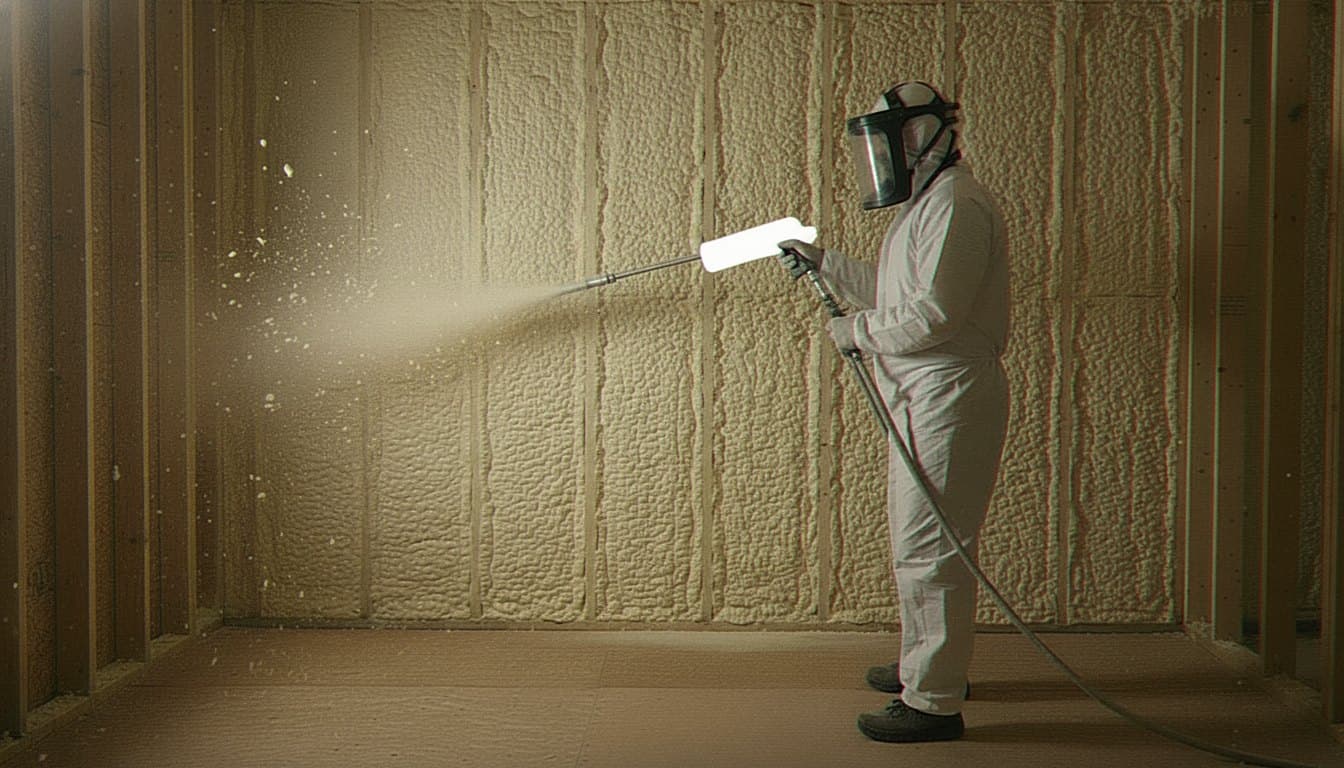
Spray foam wall insulation made for Joliet homes
Plenty of Joliet homes have thin batt insulation stuffed into the outside walls, and over the years that batt settles, sags, and leaves gaps near the top of the wall and around the outlet boxes. You feel it fast. It shows up as a cold streak along one wall, a room over the garage that never quite warms up, or a furnace that runs and runs all January. Wind off the open ground near the Des Plaines River pushes cold air right through those gaps. Newer homes are not always safe either, since a rushed framing job can leave voids the first crew never filled. We fix the wall instead of asking you to crank the heat and pay for it. Our crew fills the empty cavity with foam that expands into every corner and stops the draft at its source. The room feels steady after that, even from the floor to the ceiling.
How we work depends on whether the wall is open or closed. On a remodel where the studs are still bare, we spray foam right into the bay, and it bonds to the sheathing and studs as it rises and cures. On a finished wall the job changes. We use an injection foam that we pump through small ports drilled between the studs, which fills the cavity behind the drywall without tearing the room apart. Either way we read the wall first. We note where the studs, wiring, and pipes sit, then plan the pour so the foam reaches the spots that leak the most air. We cover your floors and trim before we start, keep the area clean as we go, and seal every port when the cavity is full. When we leave, the wall is ready for patch and paint.
- Every corner of the room feels the same. No cold streak along the wall by your couch on a raw Joliet night.
- A quieter house. Foam in the wall softens road noise from busy streets and dulls the sound that moves between rooms.
- Less strain on your furnace and air conditioner. The heat and cool air you pay for stays in the room instead of leaking through the studs.
- Fewer drafts. Old settled batt tends to fall short around outlets, window trim, and the top of the wall, and foam seals those spots.
- A tighter shell overall. It pairs with the attic and rim joist work we do, so the whole house holds a steady temperature.
For most outside walls we reach for closed cell foam. It is dense, adds stiffness, and slows moisture behind the drywall. Open cell foam is a softer, lighter option. It fills big cavities well and does a great job quieting a room, which makes it a smart pick for inside walls between a bedroom and a loud den. We walk you through which one fits your wall and your goal before any foam goes in, and we never push the pricier option just to pad the job. On every Joliet job we watch for wiring, plumbing, and old water marks. A wall that has leaked before needs a look before we seal it up tight.
If one room in your Joliet home never keeps up with the rest, or the walls feel cold to the touch in winter, give us a call. We will look at the wall, explain what is going on inside the cavity, and lay out a plan in plain words. No pressure, no runaround, just a straight answer from the crew that will do the work.