
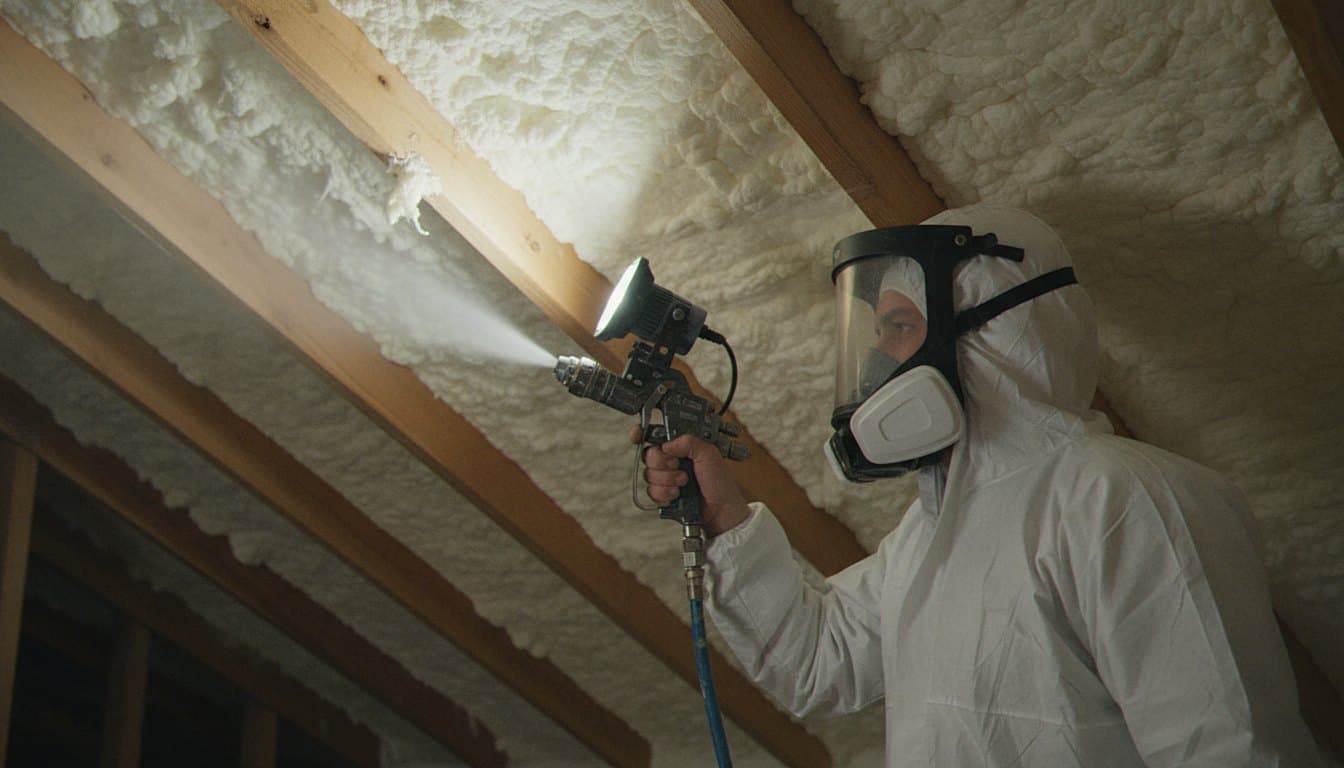
What open-cell spray foam does in a Joliet home
Open-cell spray foam is the lighter of the two spray foams we install. We spray it as a liquid and it swells fast, filling every stud bay, gap, and odd cavity in the framing. Once it sets it stays soft and springy, almost like a firm sponge. That open structure is what gives it two of its best traits. It muffles sound well, and it seals air leaks across the whole surface rather than at a few points. In a Joliet home that means fewer drafts sliding through the wall and a quieter room on the other side.
Joliet sits in the cold part of the map, so our winters bite and our summers turn heavy and humid. Open-cell foam handles that swing by stopping the air movement that carries heat and moisture through a wall. It does let water vapor pass, which is a feature in the right spot and a problem in the wrong one. We put it where the assembly wants to dry inward, such as attic roof decks and interior walls. We keep it out of spots that sit against soil or standing water. Knowing that line is most of the job, and it is why we look at each cavity before the hose ever comes out.
- Seals the whole wall against drafts, not just the obvious gaps
- Softens sound between rooms and floors, a real win in busy Joliet households
- Expands to fill wiring runs, plumbing chases, and crooked framing in older homes
- Covers more square footage per pass, so large attics get done in less time
- Lets a roof deck dry toward the inside, which suits many Joliet attics
Most of the open-cell work we do in Joliet lands in three places. The first is the underside of the roof in a finished or soon to be finished attic, where the foam turns a hot vented space into part of the conditioned house. The second is interior walls, where owners want a quieter bedroom, office, or media room. The third is the rim area and odd framed pockets that batts never seal well. We match the depth of the foam to the cavity and the goal, then trim it flush so drywall or paneling goes on clean.
If your Joliet home has cold rooms, loud rooms, or an attic you want to bring inside the thermal envelope, open-cell foam is often the right tool. Call us and tell us what the space is doing. We will look at the framing, talk through whether open or closed cell fits, and give you a straight plan with no runaround.