
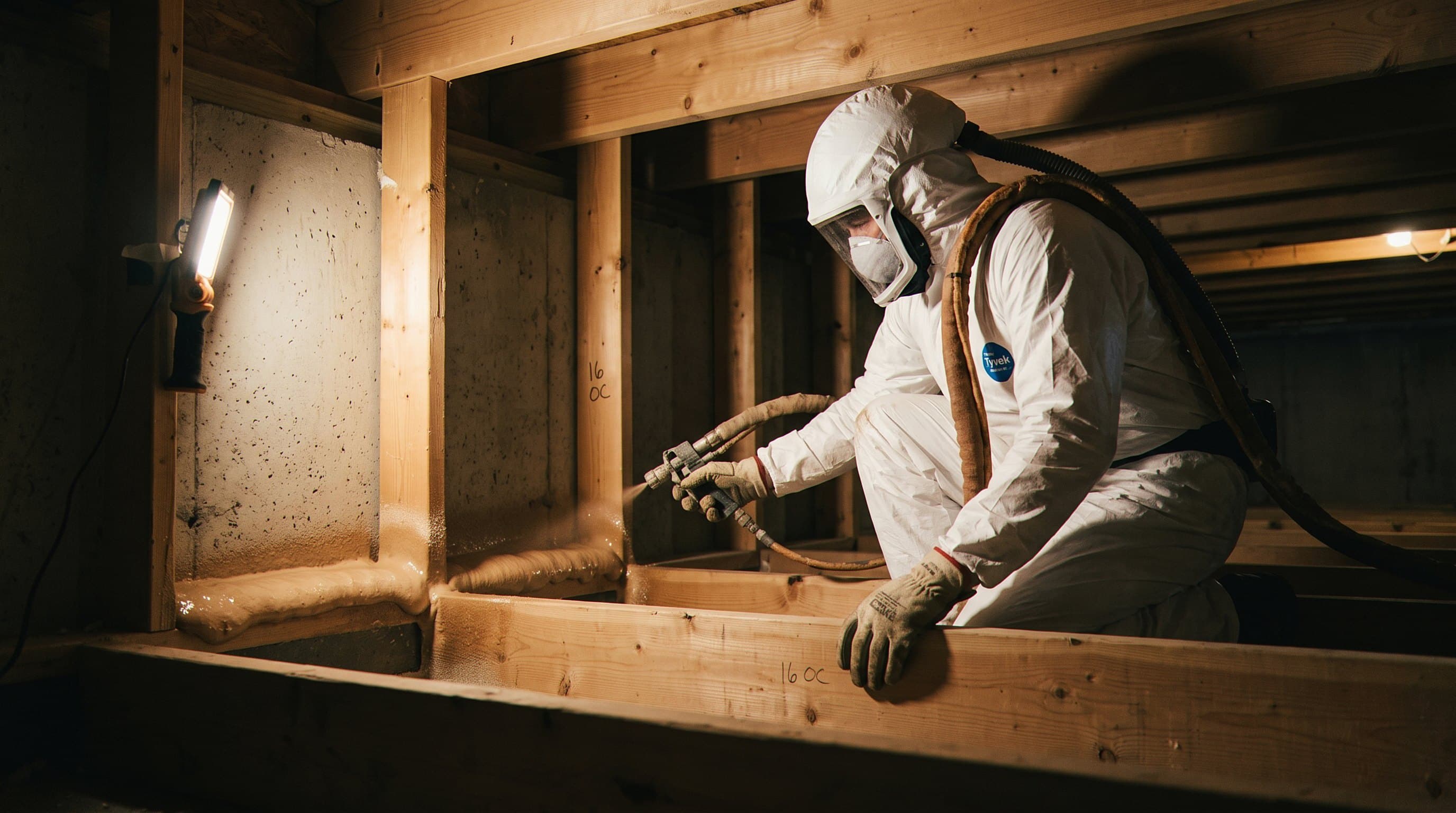
Closed-Cell Spray Foam Insulation · Joliet

Closed-Cell Spray Foam Insulation in Joliet, IL

We install closed-cell spray foam in Joliet homes and buildings, sealing air leaks and adding a dense moisture barrier that holds up through Will County winters. Call us, we answer, quote the job straight, and get your crew on the calendar fast.

Free Quote

Free Closed-Cell Spray Foam Insulation quote.

We reply within 1 business hour. No spam, ever.

What we install

Dense, high performing foam built for Joliet weather

Closed-cell spray foam is the dense option in our lineup, and it does more than slow heat loss. As it cures it expands into a rigid layer that grips the framing, fills the gaps around wires and pipes, and forms one solid surface across the wall or roof deck. That density is why it carries a high R-value per inch, so you gain real thermal performance without giving up much depth in the cavity. In a Joliet winter, when cold air pushes hard against the north side of the house, that matters.

The other thing closed-cell foam does is block moisture. Once it sets, the foam resists water and stops damp air from drifting through the assembly, which keeps the framing dry and cuts the mold risk that plagues older Will County homes. We see this a lot in basements and rim joists near the Des Plaines River, where ground moisture never really lets up. A layer of closed-cell foam there works as insulation and as an air barrier at the same time, so you get two jobs from one pass of the gun.

  • High R-value per inch, so you get strong thermal performance even in a shallow wall cavity or a tight rim joist.
  • Blocks liquid water and damp air, which protects Joliet framing and holds down mold and rot through humid summers.
  • Adds real rigidity to the structure once it cures, stiffening walls and roof decks as it bonds to the framing.
  • Seals the small gaps that batts leave behind, so drafts around outlets, pipes, and sill plates stop cold.
  • Keeps its shape for the life of the building and will not sag, settle, or lose thickness the way loose fill can.
One pass of closed-cell foam gives a Joliet home a tough insulator and a moisture barrier in the same layer, which is why we reach for it on the jobs that see the most water.

Because the foam is so dense, we apply it in measured lifts and let each pass cure before we add the next. That control is how we hit the thickness your project needs without trapping heat or wasting product. Our crew masks off the space, protects your floors and fixtures, and cleans the trim after the spray is done. When we leave, the cavity is sealed, the surface is even, and the room is ready for drywall or whatever comes next.

If you own a home or building in Joliet and want insulation that fights both cold and moisture, closed-cell spray foam is worth a look. Call us and tell us what you are dealing with, whether it is a cold basement, a leaky rim joist, or a whole new build. We will walk the space, explain what the foam can do, and give you a straight plan. No runaround, no pressure, just the work.

Materials

What goes into a closed-cell foam job

Closed-cell spray foam arrives as two liquids that we keep in heated drums right up to the moment they mix. The gun combines them at the tip, and the reaction makes the foam expand and harden in seconds. Because the chemistry is sensitive to temperature and ratio, we run a proportioner that holds both sides in balance and log the readings as we go. Get that ratio wrong and the foam never reaches full strength, so we do not cut corners on the setup.

The foam we use is a medium density formula built for interior application on walls, roof decks, rim joists, and basement surfaces. We choose the thickness to match the assembly and the code target for that part of the house, since a roof deck in an unvented attic asks for more depth than an interior wall. Around here we also weigh how much the space fights moisture, because a Will County basement near the river needs a heavier hand than a dry upstairs room.

  • Two part foam mixed on site, never premixed in a can
  • Heated hoses and a proportioner that holds the ratio steady
  • Thickness set to the assembly, from rim joist to roof deck
  • Masking, floor cover, and a clean trim before we leave
What about the alternatives?

Closed-cell foam next to the other ways to insulate

Every insulation choice has a place, and the right one depends on the wall, the budget, and how hard the space fights water. Here is how closed-cell foam stacks up against the common options we see in Joliet.

Closed-cell spray foam

The dense choice with a high R-value per inch, a moisture barrier baked in, and added stiffness for the structure. Our pick for basements, rim joists, and roof decks.

Recommended

Open-cell spray foam

A lighter, softer foam that seals air well and costs less to fill a cavity, but it soaks up water and gives less R-value per inch. Good for interior walls, less so where moisture is a threat.

Acceptable

Loose-fill cellulose

Fills attics and closed cavities fast and dampens sound, yet it settles over the years and gives no real air or moisture barrier. Fine on an attic floor, weak in damp spots.

Acceptable

Fiberglass batts

The familiar rolled option that is easy to place in open walls, but it leaves gaps at every wire and pipe and does nothing to stop air or water. Easy on the budget, far from airtight.

Acceptable

No added air sealing

Leaving the gaps around pipes, wires, and sill plates open undoes much of what any insulation can do, since air carries most of the heat and moisture. This is the false savings we talk owners out of.

Skip

Fiberglass batts alone in a wet basement

Batts against a damp Joliet foundation wall hold water, grow mold, and lose their loft, so the wall ends up colder and less healthy than before. We steer people away from this in any space near the river.

Skip
How it goes

From quote to walk-on, fast.

01

Your inquiry

Call or send the short form with what is going on at your place. A sentence or two is plenty for the first step.

02

We talk it through

We go over the situation on the phone, ask the questions that matter, and tell you what we would do next.

03

A clear plan

You get a plain-language rundown of the work, the order it happens in, and what to expect on the day.

04

The work gets done

Our crew shows up when we said, does the job, and walks you through the result before leaving.

Before you book

Straight answers on closed-cell foam

Owners ask us the same handful of things before they book, so here are honest answers, no sales spin.

Is closed-cell foam worth the extra cost over open-cell?
In a spot that sees water or needs the most R-value in a thin cavity, yes. Basements, rim joists, and roof decks are where the density pays off. For a dry interior wall, open-cell often does the job for less, and we will tell you when that is the smarter call.
Will the foam trap moisture inside my walls?
No. Closed-cell foam resists water and blocks damp air from moving through the assembly, so the framing behind it stays drier, not wetter. The trouble comes from leaving gaps, not from sealing them, and a full closed-cell layer leaves no gaps.
Do I have to leave the house while you spray?
For most jobs we ask you to stay out of the work area during the spray and for a short cure window after. We ventilate the space, and once the foam sets and the air clears, the room is safe to use. We will give you a clear timeline before we start.
Can you spray over old insulation?
Sometimes, but not always. If the old batts are wet, moldy, or hiding a leak, we pull them first so the foam bonds to a clean, dry surface. On a sound cavity we can often spray right in. We check before we quote so there are no surprises.
How thick does the foam need to be?
It depends on where it goes. A rim joist, an interior wall, and an unvented roof deck each ask for a different depth to hit the code target and the performance you want. We measure the assembly and set the thickness to match, then apply it in even lifts.
Does closed-cell foam help with sound?
It helps, though sound is not its main job. The dense layer and the tight air seal cut the drafts and the outside noise that ride along with them. If quiet is your top goal we will talk through the options, since some other materials deaden sound better.
Aftercare

Living with closed-cell foam

One of the reasons we like closed-cell foam is how little it asks of you once it is in. The layer does not settle, sag, or lose thickness over the years, so the R-value you get on day one is the R-value you keep. There is no filter to change and no part to service. Still, a quick look now and then keeps everything honest, and it lets you catch a roof or plumbing leak early before it ever reaches the framing behind the foam.

  • Glance at exposed foam in the basement or attic once a year for any new cracks or gaps
  • Watch for water stains on the foam, which point to a roof or pipe leak above it
  • Keep the foam clear of open flame and high heat, since it is a plastic and should stay covered per code
  • Leave any trimming or patching to us, so the seal and thickness stay right
  • After a big storm, check that attic vents and flashing still shed water away from the foam
  • Call us if you remodel and cut into a foamed wall, and we will reseal the opening
FAQ

Closed-cell spray foam questions from Joliet owners

What is the difference between open-cell and closed-cell spray foam?
Open-cell foam is light and soft, and it expands to fill cavities while doing a great job dampening sound inside interior walls. Closed-cell foam is a different animal. It is denser, it blocks moisture, and it adds rigidity, which is why we reach for it in crawl spaces and along rim joists. On most Joliet homes we match the foam to the spot.
Is spray foam insulation worth it for an older Joliet home?
Older homes around Joliet often leak air through dozens of small gaps the original builder never sealed, and those leaks add up fast. Spray foam insulation closes them. It holds indoor temperatures steady through the cold Will County winters, and most owners notice fewer drafts and a furnace that cycles far less once we finish.
How can spray foam insulation lower my energy bills?
Heat escapes fastest where air moves freely, and ordinary batts do little to stop that flow. Spray foam insulation seals the leaks and slows heat transfer, so your furnace and your air conditioner both run less to hold the exact same setting on the thermostat. That steadier load is where the savings come from.
Is spray foam insulation safe once it is fully cured?
Once it cures, the foam turns into a stable, inert solid that stays put in your walls and attic for the life of the building. Our crew handles ventilation and cure time during the install. When we leave, the space is ready for normal use, with no lingering odor and nothing there to attract pests.
Can you spray foam over my existing insulation, or does it need to come out first?
It depends. Old batts or blown insulation that is damp, moldy, or matted down should come out first so the foam can bond to a clean, dry surface and do its job. When the existing material is dry and sound, we can often add right over it, and we will tell you which path fits your home after we take a look.
Ready when you are

Let's make your next steps easier

Tell us what is going on at your Joliet home and we will walk you through the options. One call or one short form is all it takes.

Call (779) 242-2080Make your inquiry
CallContact us