
Crawl Space Encapsulation & Insulation · Joliet

Crawl Space Encapsulation and Insulation in Joliet, IL

We seal the ground, close the vents, and insulate the walls so the space under your Joliet home stays dry and warm through every season.

Free Quote

Free Crawl Space Encapsulation & Insulation quote.

We reply within 1 business hour. No spam, ever.

What we install

What crawl space encapsulation does for a Joliet home

A vented crawl space in Joliet spends every summer pulling in warm, humid air off the Des Plaines River valley. That moisture settles on cool wood and pipes, and before long you get musty air, damp insulation, and floors that feel cold in the rooms above. Will County winters push the other way. Frost drives deep, drafts pour through the vents, and the pipes down there sit close to freezing on the worst January nights. A crawl space that breathes with the weather works against your house all year.

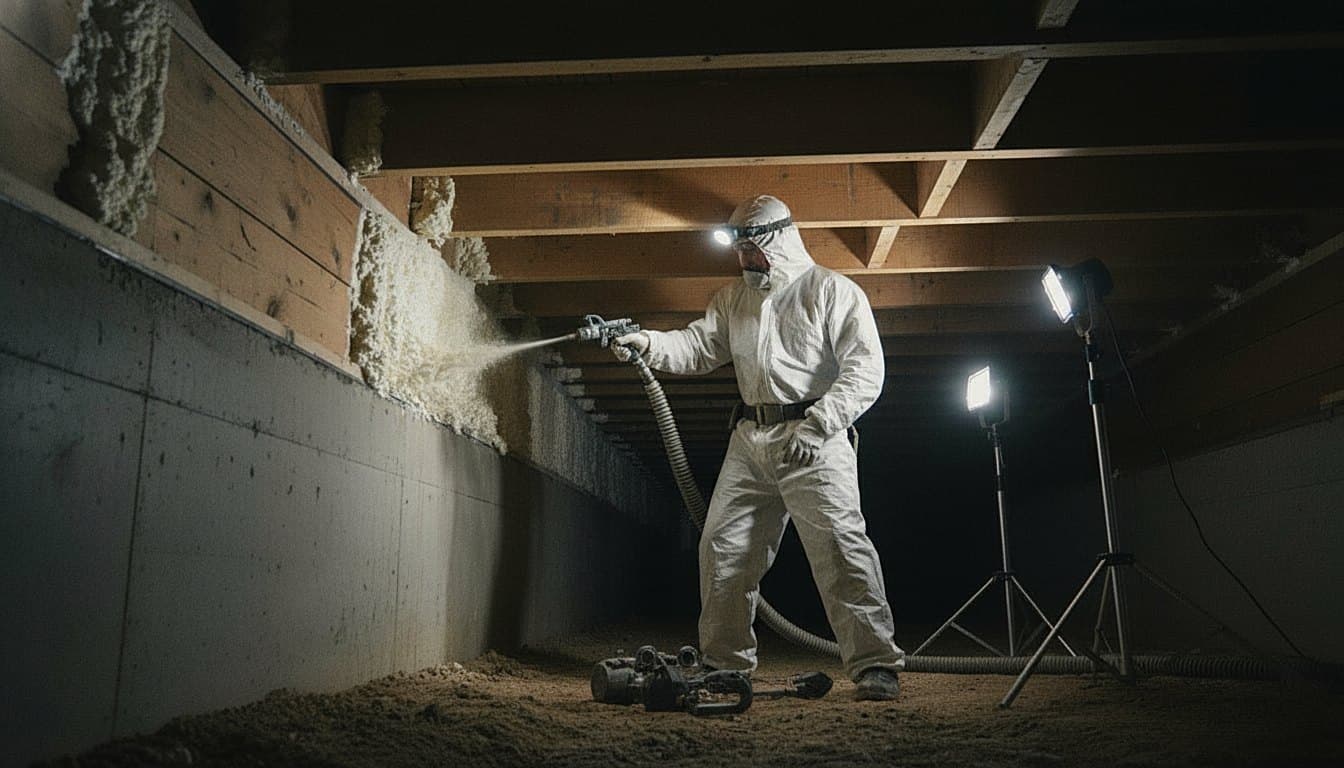
We fix that by turning the crawl space into a clean, dry part of the house. First we clear out the wet debris and any ruined batt insulation. We seal the old foundation vents and cover the dirt floor with a heavy vapor barrier that runs up the walls. Then we insulate the perimeter with closed cell spray foam, which stops air movement and blocks moisture in one pass. The result is a sealed room that stays near the temperature of the rest of your home.

  • Warmer floors upstairs, because the cold no longer rises through open vents and thin batts.
  • Drier air in the whole house, since the damp ground and humid summer air stay sealed out.
  • Fewer musty smells and less mold on the wood, joists, and ductwork under the floor.
  • Lower heating and cooling bills when the furnace and air conditioner stop fighting a leaky space.
  • A cleaner spot to run wiring, store seasonal items, or reach the plumbing when something needs work.
A crawl space should feel like part of your house, not a damp cave under it. Once we seal and insulate it, most folks stop thinking about it at all.

Every Joliet crawl space is a little different. Some sit under a single family ranch off Larkin Avenue with a shallow dirt floor. Others hide beneath an addition where a past owner never sealed a thing. We walk the space, check the moisture, look for standing water and rot, and tell you plainly what it needs. If a sump or a drain makes sense before we seal, we say so up front.

If the space under your Joliet home feels damp, smells off, or leaves your floors cold every winter, we can help. Call and tell us what you are seeing down there. We will come out, look it over, and lay out a clear plan to seal, dry, and insulate it so it works with your house instead of against it.

Materials

What we use to seal and insulate a crawl space

The core of a good encapsulation is the barrier on the ground. We use a thick, reinforced vapor sheet that stands up to foot traffic and does not tear when someone crawls across it to reach a valve. It laps up the foundation walls and gets sealed at every seam so ground moisture has nowhere to sneak through. On the walls we lean on closed cell spray foam, because it insulates and air seals at the same time and shrugs off the damp far better than fiberglass ever could.

For the perimeter and rim joist we match the foam to the job. Closed cell gives us a high r-value per inch and a moisture block where the wood meets the foundation. Where a space stays dry and we only need to slow air, open cell foam can round out the plan. We also fit the space with a way to manage humidity, whether that is a sealed feed of conditioned air or a small dehumidifier, so the room holds steady once we close it up.

  • Reinforced vapor barrier across the full floor and up the walls
  • Closed cell spray foam on the perimeter and rim joist
  • Sealed foundation vents to stop humid summer air
  • Humidity control so the sealed space stays dry
What about the alternatives?

Ways to handle a Joliet crawl space, compared

Not every crawl space needs the same fix, and plenty of the advice floating around does more harm than good in our climate. Here is how the common approaches stack up under Joliet weather.

Full encapsulation with closed cell perimeter foam

Seals the ground, closes the vents, and insulates the walls in one system. It handles our humid summers and cold winters and keeps the space dry for the long haul.

Recommended

Vapor barrier plus a dehumidifier

A solid step that dries the space and cuts the musty smell. It works well when the walls are already sound, though it leaves the perimeter uninsulated.

Acceptable

Rim joist foam only

Stops a lot of the worst drafts and is a smart partial fix on a tight budget. It does not seal the floor, so ground moisture stays in play.

Acceptable

Sealed vapor barrier without added wall insulation

Keeps ground moisture down and is a fair starting point when money is tight. You still lose heat through bare block, so the floors stay cool.

Acceptable

Fiberglass batt between the floor joists

In a vented Joliet crawl space this soaks up summer humidity, sags off the joists, and turns into a mold shelf. We pull far more of it out than we ever put in.

Skip

Leaving the vents open through the seasons

The old code idea that a crawl space should breathe. In our climate that just invites damp air in summer and freezing drafts in winter.

Skip
How it goes

From quote to walk-on, fast.

01

Your inquiry

Call or send the short form with what is going on at your place. A sentence or two is plenty for the first step.

02

We talk it through

We go over the situation on the phone, ask the questions that matter, and tell you what we would do next.

03

A clear plan

You get a plain-language rundown of the work, the order it happens in, and what to expect on the day.

04

The work gets done

Our crew shows up when we said, does the job, and walks you through the result before leaving.

Before you book

Straight answers before we seal your crawl space

Homeowners around Joliet ask us the same handful of things before we start. Here are the honest answers.

Will sealing the vents trap moisture and make things worse?
It is the opposite. Open vents are what let humid summer air pour in and condense on cold surfaces. Once we seal the vents, cover the ground, and control the humidity, the space stays drier than it ever was while it breathed.
Do I really need this if I have a full basement too?
Plenty of Joliet homes mix a basement with a crawl space under an addition or a back room. If any part of the floor sits over a damp, vented crawl, that section still pulls cold air and moisture up into the house. We treat the crawl on its own.
There is standing water down there sometimes. Can you still seal it?
We handle the water before anything else. Near the Des Plaines River and on the flatter parts of Will County, a high water table is common. We may set a sump or a drain line before the barrier goes down so the seal actually holds.
How long does the work take?
Most crawl spaces are a one or two day job once we start, depending on size, how much old insulation comes out, and whether we add drainage. We give you a clear window before we begin so you are not left guessing.
Will the spray foam smell linger in my house?
Closed cell foam cures fast and the space is sealed off from your living area. We ventilate while we work and let it set before we button up, so you are not left with a lasting odor.
Can I still get to my pipes and shutoffs after you seal it?
Yes. We leave clear access to valves, the sump, and any junction you might need. A sealed crawl is actually a cleaner, drier place to reach that plumbing when the time comes.
Aftercare

Keeping your sealed crawl space in good shape

A properly sealed crawl space asks for very little once we finish. The barrier does the heavy lifting, and the insulation holds where we put it. Still, a quick look a couple of times a year keeps small issues from growing. Spring and fall are good moments to glance down there, especially after the heavy Joliet storms that roll through in summer.

  • Check the vapor barrier for tears after anyone crawls through to reach a pipe or valve.
  • Glance at the humidity reading if we set a dehumidifier and empty or clear its drain.
  • Watch for any new damp spots on the barrier after a heavy Will County rain.
  • Make sure the sump pump, if you have one, still runs and drains clear.
  • Keep the sealed vents closed and let us know if a cover comes loose.
  • Call us if you smell must return, since it usually points to a seam that needs a reseal.
FAQ

Crawl space questions we hear across Joliet and Will County

What is the difference between open-cell and closed-cell spray foam?
Open-cell foam is light and soft, and it expands to fill cavities while doing a great job dampening sound inside interior walls. Closed-cell foam is a different animal. It is denser, it blocks moisture, and it adds rigidity, which is why we reach for it in crawl spaces and along rim joists. On most Joliet homes we match the foam to the spot.
Is spray foam insulation worth it for an older Joliet home?
Older homes around Joliet often leak air through dozens of small gaps the original builder never sealed, and those leaks add up fast. Spray foam insulation closes them. It holds indoor temperatures steady through the cold Will County winters, and most owners notice fewer drafts and a furnace that cycles far less once we finish.
How can spray foam insulation lower my energy bills?
Heat escapes fastest where air moves freely, and ordinary batts do little to stop that flow. Spray foam insulation seals the leaks and slows heat transfer, so your furnace and your air conditioner both run less to hold the exact same setting on the thermostat. That steadier load is where the savings come from.
Is spray foam insulation safe once it is fully cured?
Once it cures, the foam turns into a stable, inert solid that stays put in your walls and attic for the life of the building. Our crew handles ventilation and cure time during the install. When we leave, the space is ready for normal use, with no lingering odor and nothing there to attract pests.
Can you spray foam over my existing insulation, or does it need to come out first?
It depends. Old batts or blown insulation that is damp, moldy, or matted down should come out first so the foam can bond to a clean, dry surface and do its job. When the existing material is dry and sound, we can often add right over it, and we will tell you which path fits your home after we take a look.
Ready when you are

Let's make your next steps easier

Tell us what is going on at your Joliet home and we will walk you through the options. One call or one short form is all it takes.

Call (779) 242-2080Make your inquiry
CallContact us